
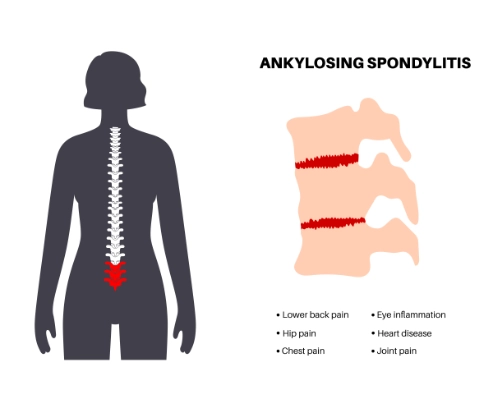
 If your lower back feels stiff and achy every morning, loosens up after a hot shower and some movement, and then flares again after you sit for a while, you might assume it’s just ordinary back pain. But for some people, that pattern points to something different: ankylosing spondylitis, a form of inflammatory arthritis that targets the spine. It often starts young, it’s frequently missed for years, and it can slowly rob you of flexibility if it isn’t managed well. The encouraging part is that staying active and keeping your spine moving makes a real difference, and that’s exactly where chiropractic care can play a valuable supporting role alongside your medical team.
In this article, we’ll walk through what ankylosing spondylitis is, what causes it, the symptoms to watch for, and how a chiropractor can help you manage stiffness, protect your posture, and keep doing the things you love.
What Is Ankylosing Spondylitis?
Ankylosing spondylitis (often shortened to AS) is a chronic inflammatory condition that mainly affects the joints of the spine and the sacroiliac (SI) joints, where your spine meets your pelvis. The name comes from Greek words meaning “stiffening” and “vertebra,” which describes what can happen over time when the condition isn’t controlled.
Unlike the wear-and-tear changes seen with degenerative disc disease, ankylosing spondylitis is driven by the immune system. Inflammation develops where ligaments and tendons attach to bone, a spot called the enthesis. As the body tries to heal that repeated inflammation, it can lay down new bone. In more advanced cases, that new bone bridges between vertebrae and gradually fuses sections of the spine together, which leads to the stiff, forward-flexed posture some people associate with the condition.
Today, doctors often place ankylosing spondylitis under a broader umbrella called axial spondyloarthritis. Some people have clear changes on X-ray (radiographic axial spondyloarthritis, the classic form of AS), while others have the same symptoms and inflammation visible on MRI without X-ray changes yet (non-radiographic axial spondyloarthritis). Both deserve proper attention and care.
What Causes Ankylosing Spondylitis?
There’s no single cause, but researchers have identified several factors that raise your risk.
Genetics and the HLA-B27 Gene
A large majority of people with ankylosing spondylitis carry a gene marker called HLA-B27. Having the gene doesn’t guarantee you’ll develop AS, since most people who carry it never do, but it significantly increases the odds. That’s also why the condition tends to run in families.
Age
Symptoms usually begin in late adolescence or early adulthood, most often before age 45. That surprises a lot of people who think of arthritis as something that only happens later in life.
Sex
Men are diagnosed more often than women, although experts now believe women are underdiagnosed because their symptoms can look different and are more easily dismissed as ordinary back pain.
Gut Health and Related Conditions
Ankylosing spondylitis is linked to inflammatory bowel disease (Crohn’s disease and ulcerative colitis) and psoriasis. Researchers believe the gut and immune system interact in ways that may help trigger spinal inflammation in genetically susceptible people.
Common Symptoms of Ankylosing Spondylitis
The hallmark of AS is what doctors call inflammatory back pain. It behaves differently from the mechanical back pain you’d get after lifting something heavy or straining a muscle. Here are the signs to pay attention to.
- Gradual onset of low back and buttock pain that lasts longer than three months, usually starting before age 45
- Morning stiffness that lasts 30 minutes or longer
- Pain that improves with movement and exercise but gets worse with rest or inactivity
- Night pain that wakes you in the second half of the night
- Alternating buttock pain that shifts from one side to the other, often from SI joint inflammation
- Stiffness that creeps up the spine into the mid-back, rib cage, and neck over time
- Reduced chest expansion when the joints where your ribs meet your spine become inflamed
- Heel or tendon pain, such as pain at the back of the heel or the bottom of the foot
- Fatigue, which is common with any ongoing inflammatory condition
- Eye inflammation (uveitis), causing a painful, red, light-sensitive eye that needs prompt medical attention
Because these symptoms develop slowly and often appear in young, active people, many patients go years before getting an accurate diagnosis. If your back pain matches several of the points above, it’s worth getting evaluated rather than just pushing through it.
How Is Ankylosing Spondylitis Diagnosed?
There isn’t one test that confirms AS on its own. Diagnosis usually combines your health history, a physical exam, imaging, and lab work. X-rays may show changes in the SI joints or spine, while MRI can reveal inflammation earlier, before X-ray changes appear. Blood tests often check for the HLA-B27 marker and general signs of inflammation.
A chiropractor is often one of the first providers to recognize the pattern, since so many people with back pain walk through a chiropractic office before they see anyone else. When we suspect inflammatory back pain, we’ll refer you to a rheumatologist, the specialist who confirms the diagnosis and manages medication. The best outcomes come when everyone on your care team works together.
How Chiropractic Care Helps Ankylosing Spondylitis
Let’s be straightforward about what chiropractic can and can’t do. Chiropractic care does not cure ankylosing spondylitis, and it isn’t a replacement for the medical treatment your rheumatologist prescribes to control inflammation. What it can do is help you manage stiffness and pain, maintain as much spinal mobility as possible, and build habits that protect your posture for the long haul. For a condition where movement is medicine, that support matters.
Care for AS always starts with a thorough evaluation and is adapted to your stage of the condition. Here’s what that care commonly includes.
Gentle Mobilization and Low-Force Techniques
Instead of forceful, high-velocity adjustments, chiropractors typically use gentle joint mobilization, instrument-assisted adjusting, and other low-force methods for patients with AS. These approaches help keep the joints that still move healthy and mobile while respecting areas where the spine may be stiffened or fused. Segments that have fused are never forcefully manipulated.
Soft Tissue Therapy
When the spine stiffens, the surrounding muscles often tighten and spasm to compensate. Techniques like trigger point therapy, myofascial release, and instrument-assisted soft tissue work can ease muscle tension in the back, hips, chest, and neck, which often makes daily movement more comfortable.
Posture-Focused Exercises
One of the biggest long-term concerns with AS is the gradual drift into a stooped, forward-bent posture. Your chiropractor can teach you targeted extension exercises, chest-opening stretches, and core and glute strengthening to help you stay upright. Daily exercise is considered a cornerstone of AS management, and having someone guide and progress your program makes it far easier to stick with.
Breathing and Rib Cage Mobility
Because AS can stiffen the joints where your ribs attach to your spine, deep breathing exercises and gentle thoracic mobility work help preserve chest expansion. This supports better breathing, energy, and endurance during activity.
Ergonomic and Sleep Guidance
Small daily adjustments add up. We can help you set up your workstation, choose a supportive mattress, use a thin pillow or none at all to discourage a forward-head posture, and build movement breaks into your day so long periods of sitting don’t leave you locked up.
Coordinated Care With Your Medical Team
Our goal is to complement, not compete with, your rheumatologist’s plan. When your inflammation is well controlled with medication, conservative care like chiropractic and exercise tends to be even more effective. We’re happy to communicate with your other providers to keep everyone on the same page.
Chiropractic Care Compared With Other Treatment Options
Ankylosing spondylitis is best managed with a team approach, and it helps to understand how each piece fits.
Medications such as NSAIDs are usually the first line of treatment for reducing inflammation and pain. When those aren’t enough, rheumatologists may prescribe biologic medications that target specific parts of the immune response. These medications address the underlying inflammatory process, which is something chiropractic care doesn’t do.
Steroid injections are sometimes used for a particularly inflamed joint, such as an SI joint, but they’re generally a short-term tool rather than a long-term strategy.
Surgery is rarely needed. When it is, it’s usually a hip replacement for severe hip joint damage or, in uncommon cases, a complex spinal surgery to correct a severe forward-bent posture.
Chiropractic care and exercise fill the gap that medication alone can’t: keeping your joints moving, your muscles balanced, and your posture upright. Medication calms the fire, and consistent movement-based care helps you keep the mobility you have. Together, they give you the best chance at a full, active life.
What to Expect When You Start Care
Your first visit includes a detailed history, a physical and neurological exam, and a review of any imaging or lab work you already have. If you haven’t been diagnosed but your symptoms suggest inflammatory back pain, we’ll explain what we found and help you get the right referral.
From there, we’ll build a plan around your goals. Many patients notice less morning stiffness and easier movement within the first few weeks of care combined with a home exercise routine. Because AS is a lifelong condition, the long-term focus shifts toward maintenance: periodic visits to keep your spine and hips moving, regular check-ins on posture, and updates to your exercise program as your needs change.
One important safety note: people with advanced AS have a higher risk of spinal fractures, even from minor falls. If you have AS and experience new or severe neck or back pain after any fall or bump, seek medical evaluation and imaging right away.
Take Control of Your Spine Health Today
Living with ankylosing spondylitis doesn’t mean accepting a future of stiffness and limitation. With the right medical treatment, consistent movement, and supportive chiropractic care, many people stay active, upright, and independent for years. Whether you’ve already been diagnosed or you’re dealing with stubborn morning back pain that just doesn’t add up, our team is here to help you get answers and a plan that fits your life.
Call our office today to schedule your consultation. We’ll take the time to understand your symptoms, work alongside your medical providers, and help you keep your spine moving the way it should.
Frequently Asked Questions About Ankylosing Spondylitis and Chiropractic Care
Is it safe to see a chiropractor if I have ankylosing spondylitis?
Yes, chiropractic care can be safe for people with ankylosing spondylitis when it’s adapted to the condition. Chiropractors typically use gentle mobilization, low-force techniques, soft tissue therapy, and exercise rather than forceful manipulation, and they avoid manipulating any spinal segments that have fused. Be sure your chiropractor knows about your diagnosis and any imaging you’ve had.
Can chiropractic care cure ankylosing spondylitis?
No. Ankylosing spondylitis is a chronic inflammatory condition, and there’s currently no cure. Chiropractic care helps manage stiffness and pain, maintain spinal and hip mobility, and support better posture. It works best alongside medical treatment from a rheumatologist, who manages the underlying inflammation.
How is ankylosing spondylitis back pain different from regular back pain?
Ankylosing spondylitis causes inflammatory back pain, which usually starts gradually before age 45, lasts more than three months, includes morning stiffness of 30 minutes or more, improves with movement, and worsens with rest. Ordinary mechanical back pain tends to follow an injury or strain and usually feels worse with activity and better with rest.
What exercises are best for ankylosing spondylitis?
Exercises that promote spinal extension, flexibility, and posture are especially helpful for ankylosing spondylitis. These include chest-opening stretches, gentle back extension movements, hip flexor stretches, core and glute strengthening, deep breathing exercises, and low-impact cardio like swimming or walking. A chiropractor or physical therapist can tailor a routine to your current mobility.
Can a chiropractor tell if I have ankylosing spondylitis?
A chiropractor can recognize the signs of inflammatory back pain during an exam and history, and may order or review imaging that suggests ankylosing spondylitis. A formal diagnosis is usually confirmed by a rheumatologist using imaging, blood tests such as HLA-B27, and clinical findings, so your chiropractor will refer you if AS is suspected.
Does ankylosing spondylitis always cause the spine to fuse?
No. Many people with ankylosing spondylitis never develop significant spinal fusion, especially with early diagnosis, effective medication, and regular exercise. Fusion tends to progress slowly and varies widely from person to person. Staying active and keeping inflammation controlled are the best ways to protect long-term mobility.
How often should someone with ankylosing spondylitis see a chiropractor?
It depends on your symptoms and stage of the condition. Many people start with more frequent visits for a few weeks to reduce stiffness and learn a home exercise routine, then shift to periodic maintenance visits to support mobility and posture. Your chiropractor will recommend a schedule based on your exam and goals.

